
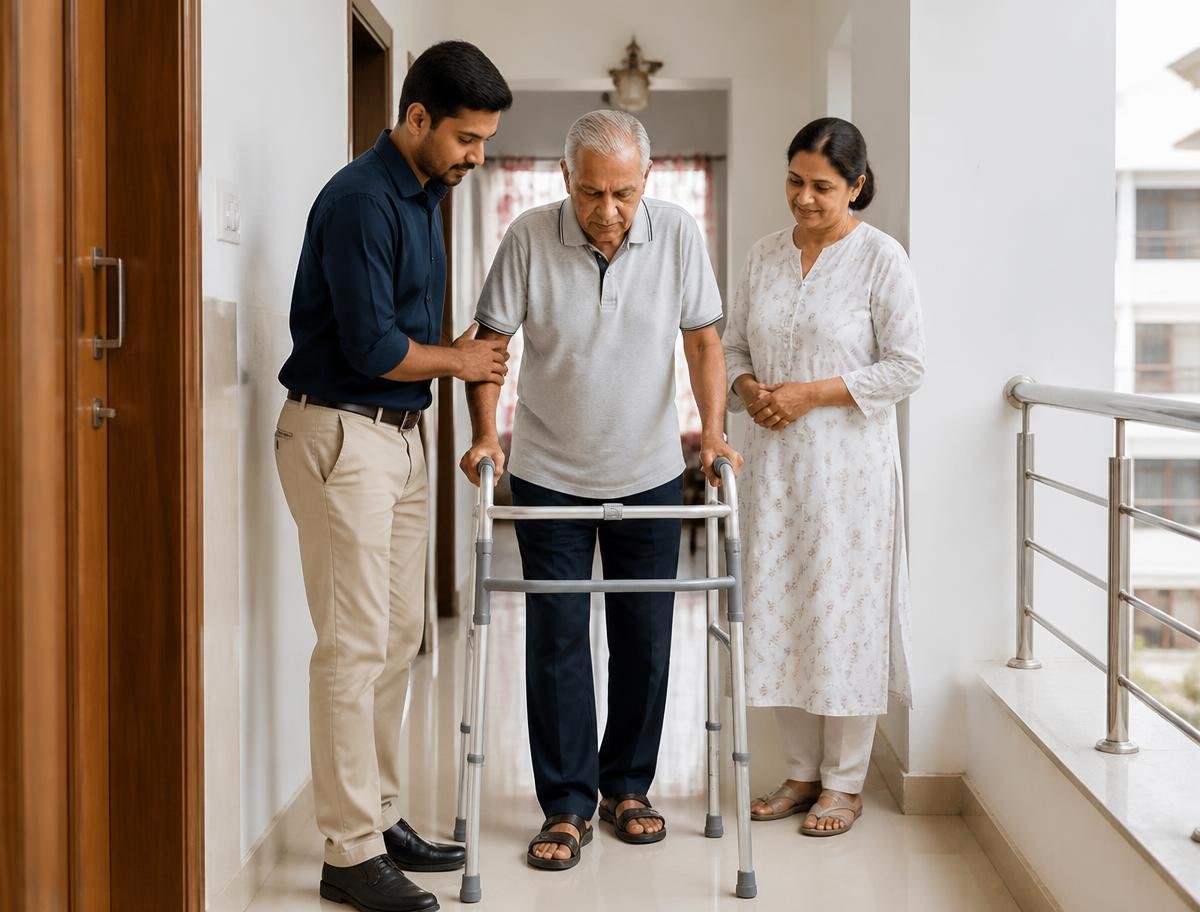
Home physiotherapy service
Gym Injury Home Physiotherapy in Indirapuram
Gym injuries follow a small number of scripts. Someone comes back after a two-month break and picks up where they left off. Someone adds twenty kilos to their deadlift in a fortnight because a trainer said they were ready. Someone benches four times a week and their shoulder finally objects.
None of that means training was a bad idea. It usually means the load went up faster than the tissue adapted. The fix is rarely to stop lifting; it's to change what, how much and how often, while rebuilding the part that got hurt.
Who can benefit
This is for you if:
- Your lower back locked up during or after a deadlift or squat
- Your shoulder hurts on bench press or overhead press
- Your knee aches on squats or leg press but is fine walking
- You've strained something and don't know when to start lifting again
- You keep aggravating the same area every training block
- You're returning to the gym after a long gap and want to avoid injury
Common problems and symptoms
Common complaints:
- Sharp catch in the lower back at the bottom of a squat
- Front-of-shoulder pain that appears at a specific bench depth
- Pain under the kneecap during leg extensions or descending stairs
- Elbow pain on pulling movements or grip work
- Wrist pain in the front rack or push-up position
- A muscle that feels tight and never releases despite stretching
How physiotherapy can help
The assessment covers the injury and the training. Both matter. Knowing that you added a fourth pressing session and dropped all pulling work explains a shoulder better than any special test will.
Treatment usually keeps you training, with modifications. Reducing range, changing the implement, swapping a barbell for dumbbells or slowing the tempo often lets you keep the stimulus while the irritated tissue settles. From there we load the injured area deliberately, because tendons and muscles adapt to load and get worse with prolonged avoidance. Technique gets looked at, though technique is blamed more often than it deserves; load management is usually the bigger factor.
- Assessment of the injury alongside your actual training programme
- Modified lifts so training continues rather than stops
- Progressive loading of the injured tissue back to full range
- Technique review for the specific lift that caused the problem
- A weekly volume plan for the return, not just a green light
- Warm-up and accessory work to address the imbalance behind it
Physiotherapy outcomes differ from person to person and depend on the condition, its cause and other medical factors. This site is general information, not a diagnosis or a treatment plan for any individual. Where a medical review, imaging or a specialist opinion is needed, we will say so and ask you to see your doctor.
The visit
What to expect during a home session
- Initial discussion. Which lift, what weight, what your programme looked like in the four weeks before the injury.
- Examination. The painful area tested directly, plus the joints above and below, since the cause often sits next door.
- Movement assessment. The problem movement reproduced with bodyweight or light load so we can see where it breaks down.
- Strength and range testing. Measured side to side, which is how we'll later decide you're ready to load normally again.
- Treatment plan. What to keep training, what to modify, what to pause, and for roughly how long.
- Therapy and loading. Hands-on work where indicated, then rehabilitation exercise that's genuinely loaded rather than token band work.
- Programme guidance and review. A modified training week written out, then reassessment and progression at the next visit.
Home visits
Treatment at home, across Indirapuram and nearby
Why home physiotherapy?
Practically, gym-goers train in the evening and would rather not add a clinic trip to the day. Home sessions after work fit.
There's a technical benefit too. If you have dumbbells, bands or a bar at home, the rehabilitation can be set up with your own equipment and loads, so there's no translation problem when you go back to training.
- Late evening slots that fit around training
- Rehab loaded with your own dumbbells, bands or kettlebell
- Programme rewritten with you rather than handed over as a sheet
- No lost training day spent travelling to appointments
Areas we serve
Most of these patients train at society gyms and commercial gyms around Ahinsa Khand, Niti Khand and Vaishali.
Sessions run across Indirapuram, including Ahinsa Khand 1 and 2, Niti Khand, Shakti Khand, Vaibhav Khand, Gyan Khand and Shipra Suncity. We also travel to Vaishali, Vasundhara, Crossing Republik, Noida and Greater Noida West, depending on the day's schedule.
Our address is VPL-19, Lower Ground, Shipra Krishna Vista Plaza, Ahinsa Khand 1, Indirapuram, Ghaziabad 201001, Near Shanti Gopal Hospital and Jaipuria Mall, Indirapuram.
FAQ
Questions about gym injury home physiotherapy
Do I have to stop training completely?
Usually not. Modifying the movement, the range or the load lets most people keep training while the injured area recovers. Complete rest tends to cost you more than it gains.
Was my form the problem?
Sometimes, but load management is the more common culprit. A jump in weight or volume, or a return after a break at the old numbers, causes more gym injuries than technique alone.
My back hurt after deadlifts. Is my disc damaged?
Most post-lifting back pain is muscular or joint-related and settles within a couple of weeks with sensible movement. Pain radiating down the leg with numbness or weakness is different and needs assessment.
How long until I can go back to my previous weights?
For a minor strain, often two to four weeks with a graded build. For tendon problems, expect longer, sometimes eight to twelve weeks of progressive loading.
Should I use a lifting belt?
A belt can help with heavy attempts. It doesn't fix technique and it isn't a substitute for building trunk strength. Using one for every warm-up set isn't useful.
Can you write my return-to-lifting plan?
Yes, and that's usually part of the work. A specific week-by-week plan with the lifts, sets and loading is more useful than being told to ease back in.
Guides
Related reading for this condition
Fall Prevention at Home: Physiotherapy Tips for Older Adults
Falls are not an inevitable part of ageing. A safer home, appropriate strength and balance work, and review of individual risk factors can help older...
Read the guideHow to Exercise Safely at Home During Physiotherapy
A home exercise plan works best when it is specific, manageable and performed consistently. Use these checks to exercise safely between physiotherapy...
Read the guideNeck Pain From Desk Work: 8 Physiotherapy Tips
Desk-related neck pain often responds better to regular movement and gradual strengthening than to chasing one perfect posture. These practical steps...
Read the guideRelated
Other services that may be relevant
Sports Injury Home Physiotherapy
Injury rehabilitation and return-to-play work for recreational and competitive athletes.
Back Pain Home Physiotherapy
Assessment and graded rehabilitation for lower and upper back pain, including sciatica-type leg symptoms.
Shoulder Pain Home Physiotherapy
Treatment for frozen shoulder, rotator cuff pain and the loss of overhead reach that comes with both.
Book Gym Injury Home Physiotherapy in Indirapuram
Call or WhatsApp us to discuss your requirement and availability.
Monday to Saturday: 07:00 - 21:00 · Sunday: 07:00 - 12:00